
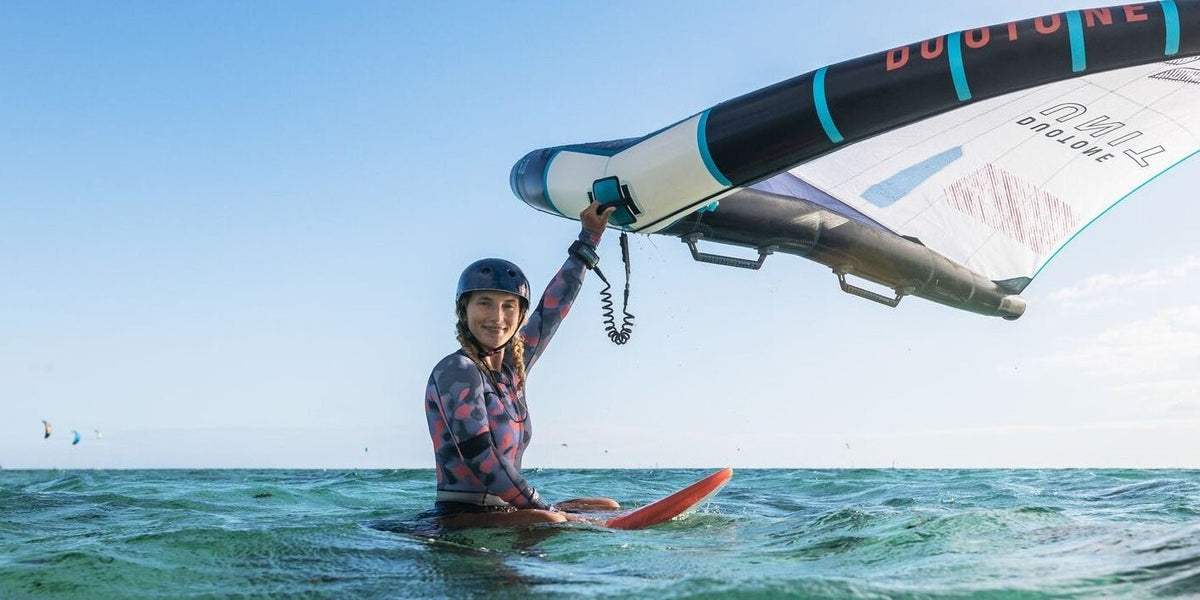
Water Sports Helmets
Filters
5 products


Water Sports Helmets – for Wing Foiling, Foiling, Kitesurfing and eFoiling
A water sports helmet protects your head when you fall onto the water or hit your board, foil or sail. When foiling and kitesurfing you fall at higher speeds, and the hard edges of the foil wing are right below you, so a helmet is part of your core kit, especially while you're learning. A good helmet is light, doesn't block your view and stays in place when you fall.
Our range includes lightweight hard-shell and thin-shell helmets certified to the European water sports helmet standard, an eFoil helmet, and ear covers for colder days.
What Is the Best Helmet for Foiling?
| Who and how | What to choose |
|---|---|
| Learning to wing foil or eFoil (frequent falls) | hard shell + multi-impact core |
| Long sessions and kitesurfing (minimum weight) | ultralight compact helmet around 200 g |
| Racing and high speeds (foiling, sailing) | In-Mold construction + higher protection |
| Cold, windy days (late autumn, winter) | helmet with ear covers |
| Schools and rentals (daily use) | hard ABS shell that resists scratches and sand |
Types of Helmets: Shell and Core
| Construction | Features |
|---|---|
| Hard ABS shell + EPP core | durable + multi-impact + slightly heavier |
| Thin microshell + EPP core | lightest + low profile + you barely feel it |
| In-Mold (shell bonded to the core) | light and rigid + for high speeds |
EPP foam returns to its original shape after an impact, so one helmet can take several falls. When learning, choose a multi-impact core, because that's when you fall the most. On an In-Mold helmet, the thin shell is bonded directly to the core, making it light, rigid and suited to high speeds.
Helmet Weight – How Much Does a Water Sports Helmet Weigh?
Water sports helmets weigh from around 170 g to around half a kilo. The lightest have a thin shell, while hard-shell helmets with ear covers are heavier.
- Around 200 g: you barely feel it, ideal for long sessions and kitesurfing.
- Around 300 g: a light but rigid helmet for higher speeds.
- Around 400–500 g: hard shell and ear covers, the most durable option for learning and schools.
A lighter helmet puts less strain on your neck, which you'll notice after several hours on the water. Ear covers add a few dozen grams, so you can take them off in summer.
EN 1385 Certification – What to Look For
Water sports helmets are certified to the European standard EN 1385, which is designed for water sports helmets. It tests impact protection and whether the helmet stays on your head. Before you buy, check that the helmet carries this certification.
Wing Foil and Foil Helmets
When wing foiling, you most often fall on take-off and in turns, when the foil is right next to you. Choose a compact, low-profile helmet that doesn't block your view back to the wing or catch on it. While learning and falling often, a hard-shell helmet with a multi-impact core is the better choice. You'll find the rest of your kit in our wing foil range.
Helmets for Kitesurfing, eFoiling and Jet Skiing
When kitesurfing, a helmet protects you from knocks against the board and falls from jumps. On an eFoil, it protects you on your first take-offs, when the board doesn't respond quite as you expect. On a jet ski and in other fast water sports, it's important that the helmet fits snugly and doesn't shift when you fall. For eFoiling, see our eFoil boards.
Helmet Ear Covers
Ear covers protect your ears from cold, wind and the impact of hitting the water when you fall. With ear covers, you can wear your helmet into late autumn and winter, when wind on a wet head chills your ears fast. Most ear covers click off, and some work with communication systems for training.
How to Choose Your Helmet Size
- Measure your head circumference with a soft tape measure about 1 cm above your eyebrows.
- Choose the size your measurement falls into.
- Adjust the helmet with the dial or pads so it fits snugly.
- When you shake your head, the helmet shouldn't move, and you should be able to fit one finger under the chin strap.
If you wear a thin neoprene cap under your helmet in winter, measure your head with the cap on. You'll find thin caps that fit under a helmet in our wetsuit hoods and caps.
Who Is a Water Sports Helmet For?
- beginners in wing foiling, foiling and eFoiling,
- kitesurfers, especially when learning jumps and tricks,
- windsurfers and sailors on fast boats,
- anyone on a jet ski, jet surf or wakeboard,
- schools and gear rentals.
How to Care for Your Water Sports Helmet
After riding in the sea, rinse your helmet with fresh water and dry it in the shade. Don't leave it in a hot car or in the sun, as heat damages the core and pads. Rinse the buckle and dial from time to time so sand doesn't jam them. For extra protection on the water, also see our life jackets and buoyancy aids.
Related categories
Wing foil · eFoil boards · Life jackets & buoyancy aids · Wetsuit hoods & caps · Wing foil accessories