
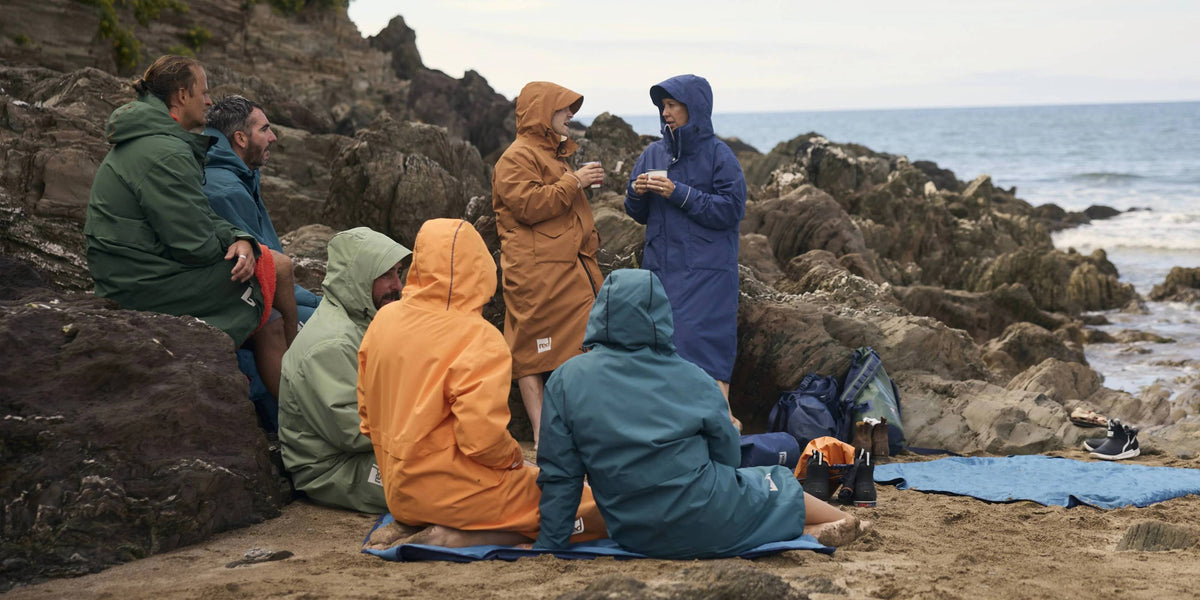
Waterproof Winter Jackets & Parkas
Filters
2 products


Waterproof Winter Jackets and Parkas for Rain, Wind and Cold
A waterproof winter jacket is a warm, lined outer layer with a waterproof shell and taped seams that keeps out rain, wet snow and wind. A winter parka is the longer version that covers your hips and thighs, so you stay warm even when walking slowly or waiting in the cold. Wear them on your commute, for dog walks, on the sidelines or after a winter swim.
For active days when a warm parka is too much, see our lightweight waterproof sports jackets. For a warm layer underneath, try our technical midlayers.
Which Waterproof Winter Jacket Should I Choose?
It mainly depends on how much you'll be moving and how long you'll be outside.
| Activity | What to choose |
|---|---|
| Commute, town, errands (rain and wind) | parka rated 10,000 mm or more with taped seams |
| Dog walks, waiting, slow walking (little movement) | long parka with a warm lining that covers hips and thighs |
| After swimming, SUP or kitesurfing (wet body in the cold) | long changing jacket with a fleece lining |
| Cycling in town | parka with a two-way zip and reflective details |
| Hiking, running, lots of movement | lightweight waterproof jacket + technical midlayer |
What Do Waterproof and Breathability Ratings Mean?
The waterproof rating tells you how much water pressure the fabric can take before it starts to leak. It's measured in millimetres of water column.
- 5,000 mm – light rain and dry snow, shorter time outside.
- 10,000 mm – moderate rain and snow, everyday use in town.
- 15,000 mm – waterproof in moderate to heavy rain, even with a backpack pressing on your shoulders.
- 20,000 mm and above – downpours, wet snow and the mountains.
Breathability, in g/m² per 24 hours, tells you how much moisture or sweat the fabric lets out. A warm parka for standing around doesn't need high breathability, but it matters more for fast walking and sport. Without taped seams, water seeps through the stitch holes, so on a waterproof jacket the seams matter as much as the fabric.
Parka or Changing Jacket?
A winter parka is made for everyday wear, a changing jacket for the shore.
- Winter parka – straighter cut, higher waterproof rating and warmth down to the thighs. For town, walks and waiting in the cold.
- Changing jacket – a long, roomy cut with stretch side panels so you can get out of a wet swimsuit or wetsuit underneath. For winter swimming, SUP, kitesurfing and surfing. In summer, a changing poncho is enough.
Lining and Warmth
The warmth in a winter jacket comes from its lining. Fleece such as sherpa traps warm air, feels soft on the skin and stays warm even when you're damp, which makes it ideal for jackets you put on after the water. The lining weight (for example 300 g/m²) tells you how warm it is: the higher it is, the warmer the jacket. In very low temperatures, add warmth with layers underneath rather than a thicker jacket.
What Size Winter Jacket Do I Need?
Choose a winter jacket with room for a fleece or midlayer underneath, without feeling tight across the shoulders. Sleeves should cover your wrists when you stretch your arms out, and a parka should reach past your hips. With a straight cut, go up a size if you have wider hips. Changing jackets are sized by height, as they need to be long and roomy. You're welcome to try them on in our shop in Ljubljana.
Winter Jackets for the Shore and Winter SUP
After a cold water swim or a winter paddle your body cools down fast, so it's important to dry off, change and warm up within minutes. A long fleece-lined jacket covers you while you change and keeps you warm even when you're still damp. On the water, wear a drysuit or wetsuit, as a winter jacket isn't made for the water.
Who Else Are Waterproof Winter Jackets and Parkas For?
- dog owners who walk in any weather,
- parents and coaches standing on the sidelines for hours,
- anyone who walks or cycles to work in winter,
- winter swimmers, paddlers and kitesurfers,
- anyone looking for one warm jacket for town and countryside.
What to Wear Under a Winter Jacket?
- Base layer: a performance T-shirt that wicks sweat away from your skin.
- Midlayer: a technical hoodie or fleece for extra warmth.
- On your head: a winter beanie to keep the heat in.
- At home or in the car after the water: a hoodie blanket to warm up in.
How to Care for a Waterproof Jacket
Wash your jacket at 30 °C with the zips closed and no fabric softener, which clogs the pores of the fabric. A short tumble dry on low heat revives the water-repellent finish. When water stops beading on the surface and soaks into the fabric instead, it's time to reproof it.
Related categories
Waterproof sports jackets · Technical midlayers · Hoodie blankets · Changing ponchos · Winter beanies