
SUP Leashes
Filters
6 products




SUP Leashes – Stay Connected to Your Board
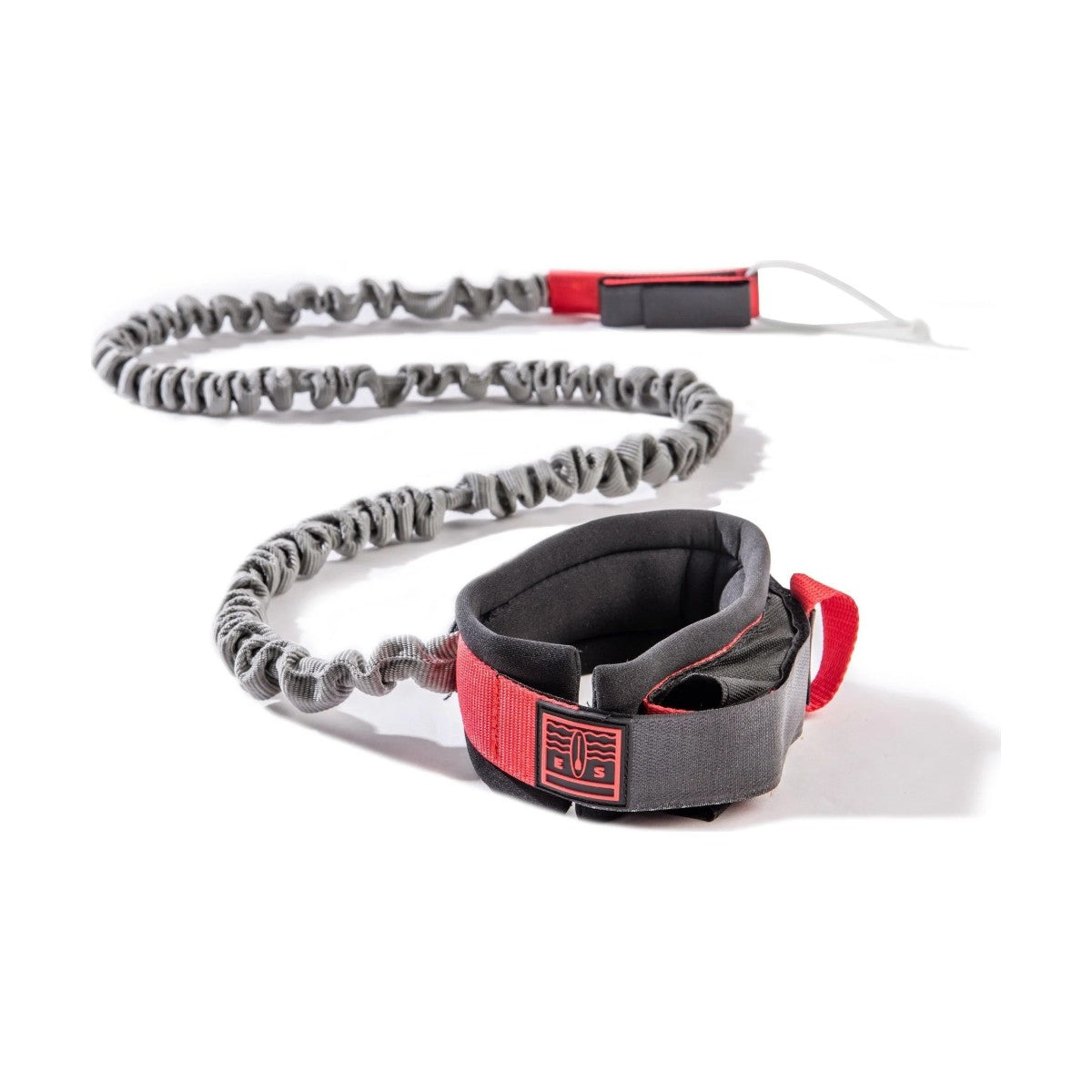
A SUP leash is a cord that clips onto the D-ring at the tail of your board at one end and fastens around your ankle, calf or waist with a cuff at the other. When you fall in, your board stays next to you instead of being carried away by wind or current. An inflatable SUP floats like a big buoyancy aid, so after a fall your board is the nearest safe place to be.
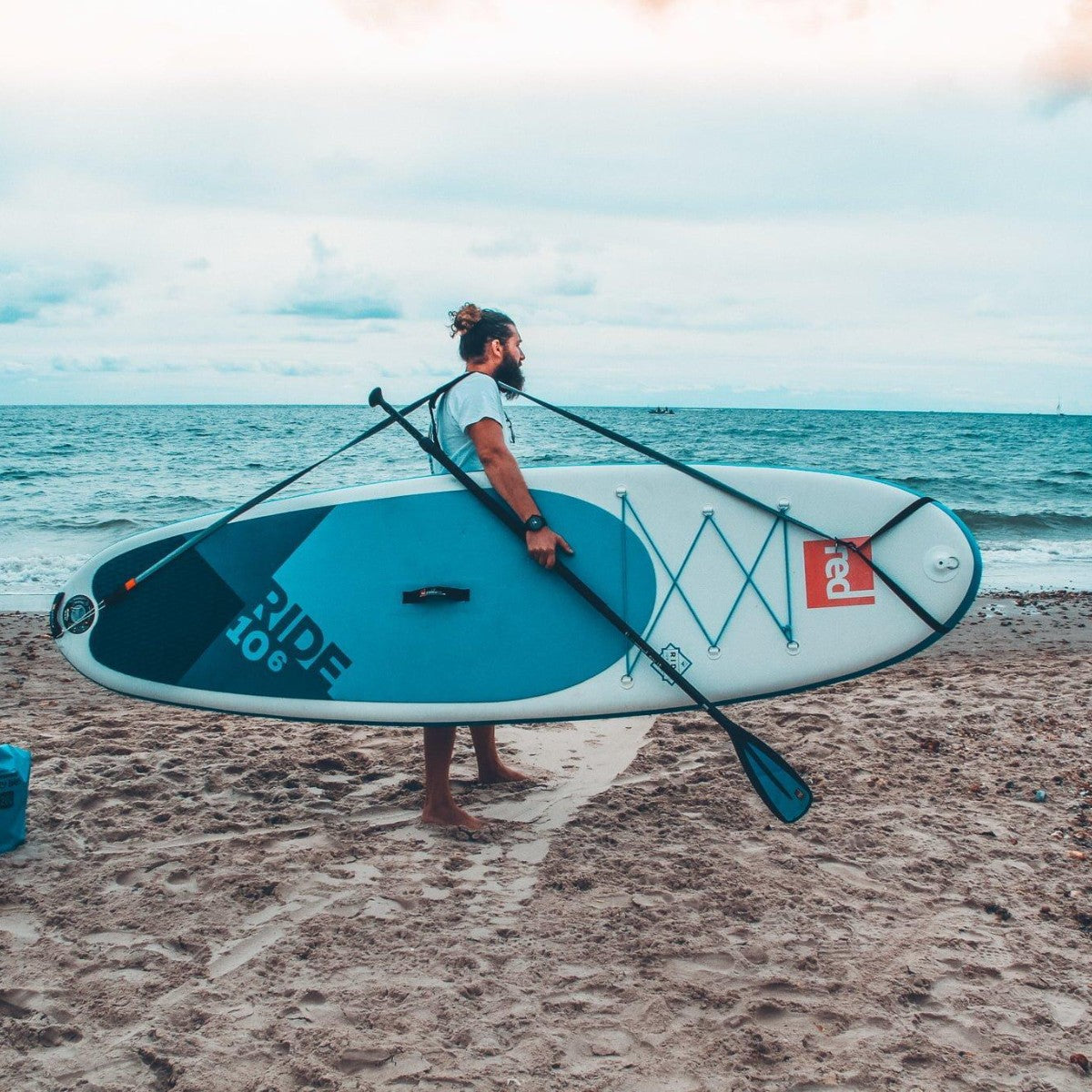
Our range includes coiled SUP leashes for flat water, a leash that turns into a SUP carry strap, and a quick-release waist belt for paddling on rivers.
Why Do I Need a SUP Leash?
An inflatable SUP is light and sits high on the water, so the wind can push it away faster than you can swim. Even a light offshore breeze can blow your board several metres away in seconds, and then all you can do is watch it drift off. With a leash you get straight back on your board after a fall, which matters most:
- in cold water, when you tire quickly,
- in wind and waves, when the board drifts fast,
- far from shore, where there's nobody to help,
- for children and less confident swimmers.
Do I Need a Leash on Flat Water?
Yes. On a lake or in a bay, the most common danger is wind that suddenly picks up, not waves. Without a leash, your board can drift away after a fall faster than you can catch it. That's why we recommend a SUP leash on any water, even when it's calm.
Which SUP Leash Should I Choose?
| Where and how | What to choose |
|---|---|
| Lakes, calm sea, bays | coiled leash on your ankle or calf |
| Flat water + a longer walk to the water | leash that doubles as a carry strap |
| Rivers and moving water | quick-release waist belt + coiled leash |
| Whitewater | specialist whitewater gear and a course |
Coiled SUP Leashes
A coiled leash is curled like a phone cord, so it sits on the board and doesn't drag in the water. It doesn't slow you down and stays out of the way as you move around the board. Coiled leashes around 2.4 m (8 ft) long suit most inflatable SUPs on flat water. You can fasten the cuff around your ankle or below the knee on your calf, where it won't get in the way as you step.
River Leashes and Quick Release
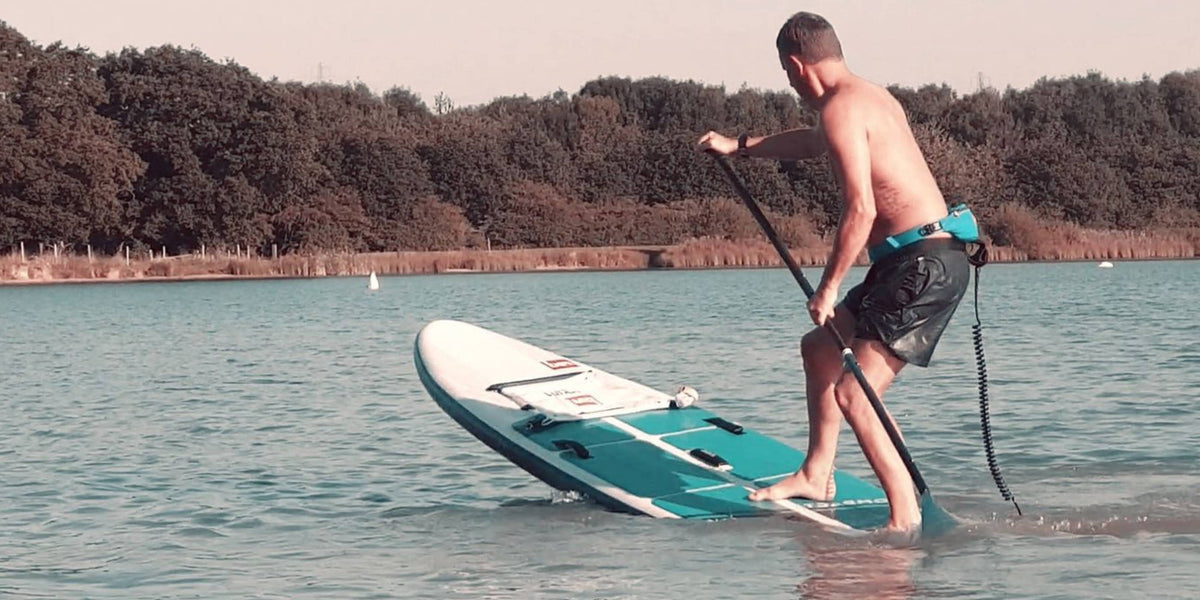
On a river, a leash attached to your leg is dangerous. If it snags on a branch or rock, the current can pull you under, and you can't reach your leg underwater. That's why on moving water you attach the leash to a waist belt with a quick-release handle. The leash is always within reach of your hands, and in an emergency you can release it with one pull.
- Wear the waist belt together with a foam buoyancy aid with at least 50 N of buoyancy.
- The belt is designed for moving water, not whitewater rapids or waves.
- Test the quick release before every trip.
How to Attach a SUP Leash
- Clip the end of the leash onto the D-ring at the tail of the board.
- Wrap the cuff around your ankle or calf, above the bone, and fasten the Velcro.
- The cuff should fit snugly but not squeeze. You should be able to slide a finger under it.
- On flat water, attach it to your back leg when you stand facing the direction of travel.
- Before every trip, check that the leash isn't damaged and the Velcro still holds.
SUP Leashes for Kids
Children fall in more often than adults and tire faster, so a leash matters even more for them. An 8 ft coiled leash also suits kids' SUPs. Fasten the cuff below your child's knee, where the leg is thicker and the cuff can't slip off over the foot. Always put your child in a buoyancy aid too.
SUP Safety Gear
A leash is a core part of your SUP safety gear. A complete setup includes:
- a leash suited to the type of water,
- a buoyancy aid or flotation belt, especially on rivers, in cold water and for kids,
- a phone in a waterproof pouch to call for help,
- clothing for the weather and water temperature, plus sun protection.
How to Care for Your SUP Leash
After use in the sea, rinse the leash and cuff in fresh water so salt doesn't damage the Velcro and stitching, then dry them in the shade. Don't tumble dry them or leave them in the sun. Replace the leash once it's damaged, the Velcro no longer holds or the coil is stretched out.
Related categories
Life jackets & buoyancy aids · SUP transport · SUP spare parts · SUP accessories