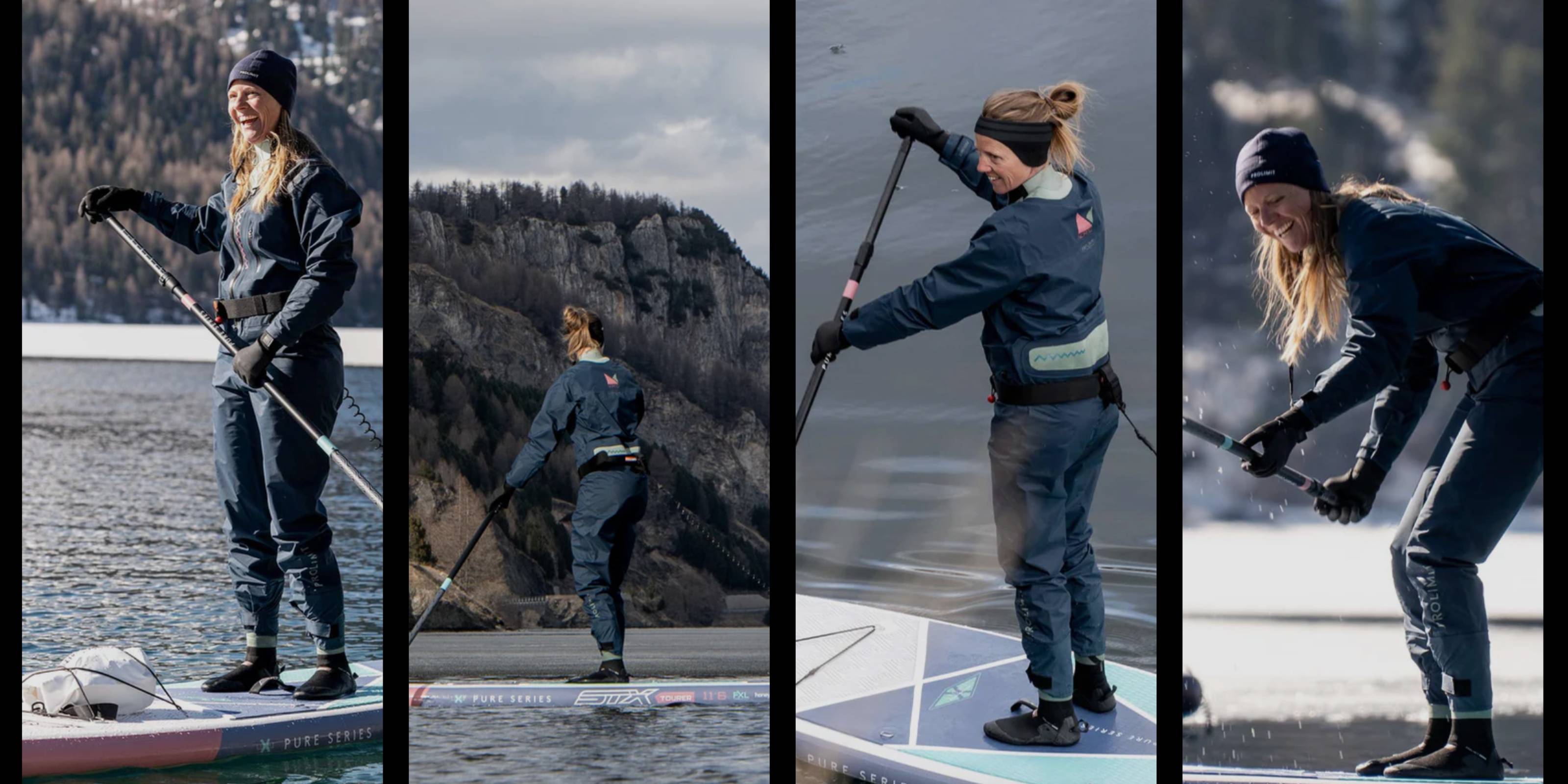
DRYSUITS FOR SUP, KAYAK AND COLD CONDITIONS
A drysuit is the ideal choice for anyone who wants to stay active on the water during colder months without feeling cold or restricted by neoprene. Unlike neoprene, a drysuit does not rely on a thin layer of water to keep you warm. Instead, it completely prevents water from coming into contact with your body, keeping the inside dry.
Drysuits are therefore an excellent solution for SUP, kayaking and other water activities in autumn, winter and early spring, when water and air temperatures are lower and wind is more frequent.
HOW DOES A DRYSUIT WORK?
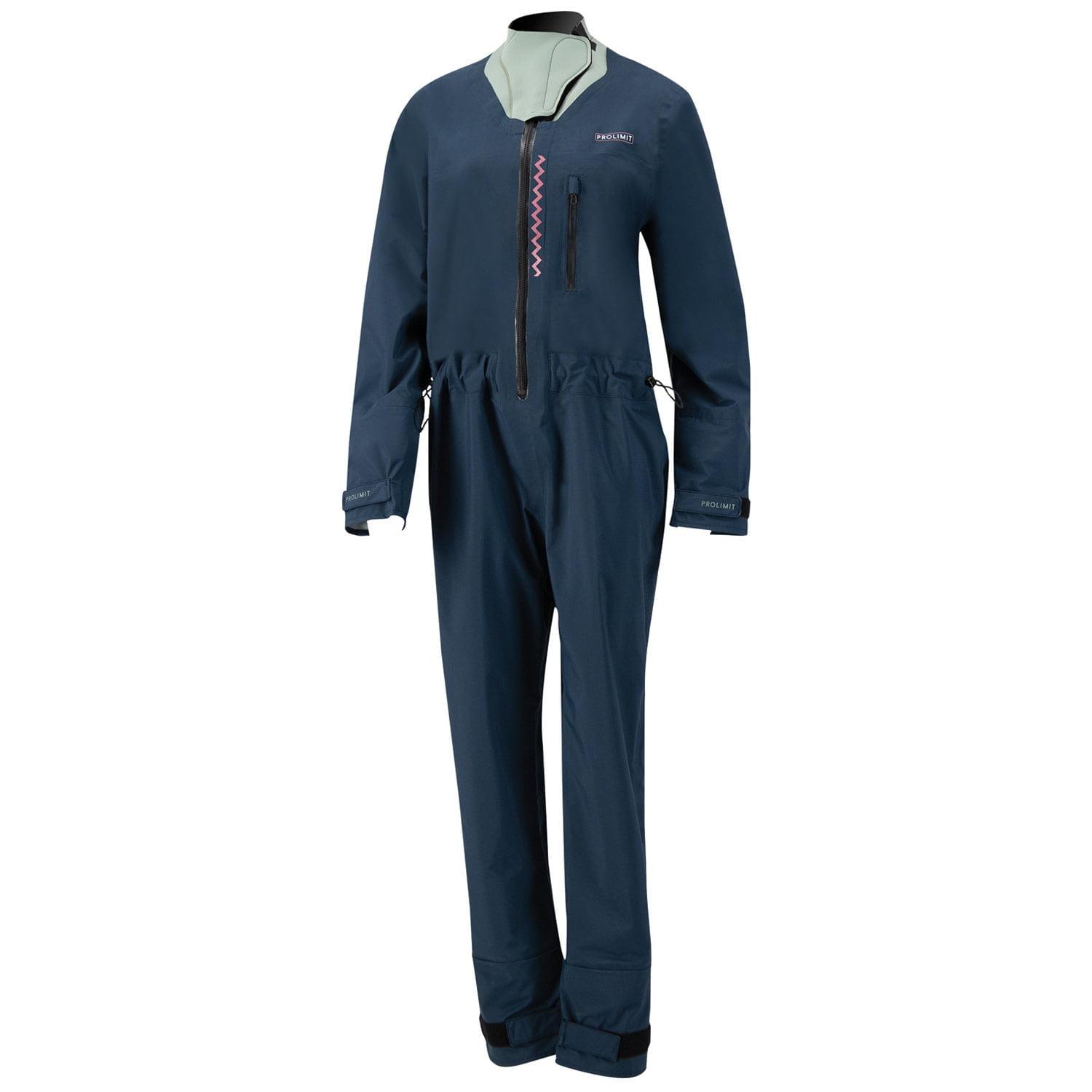
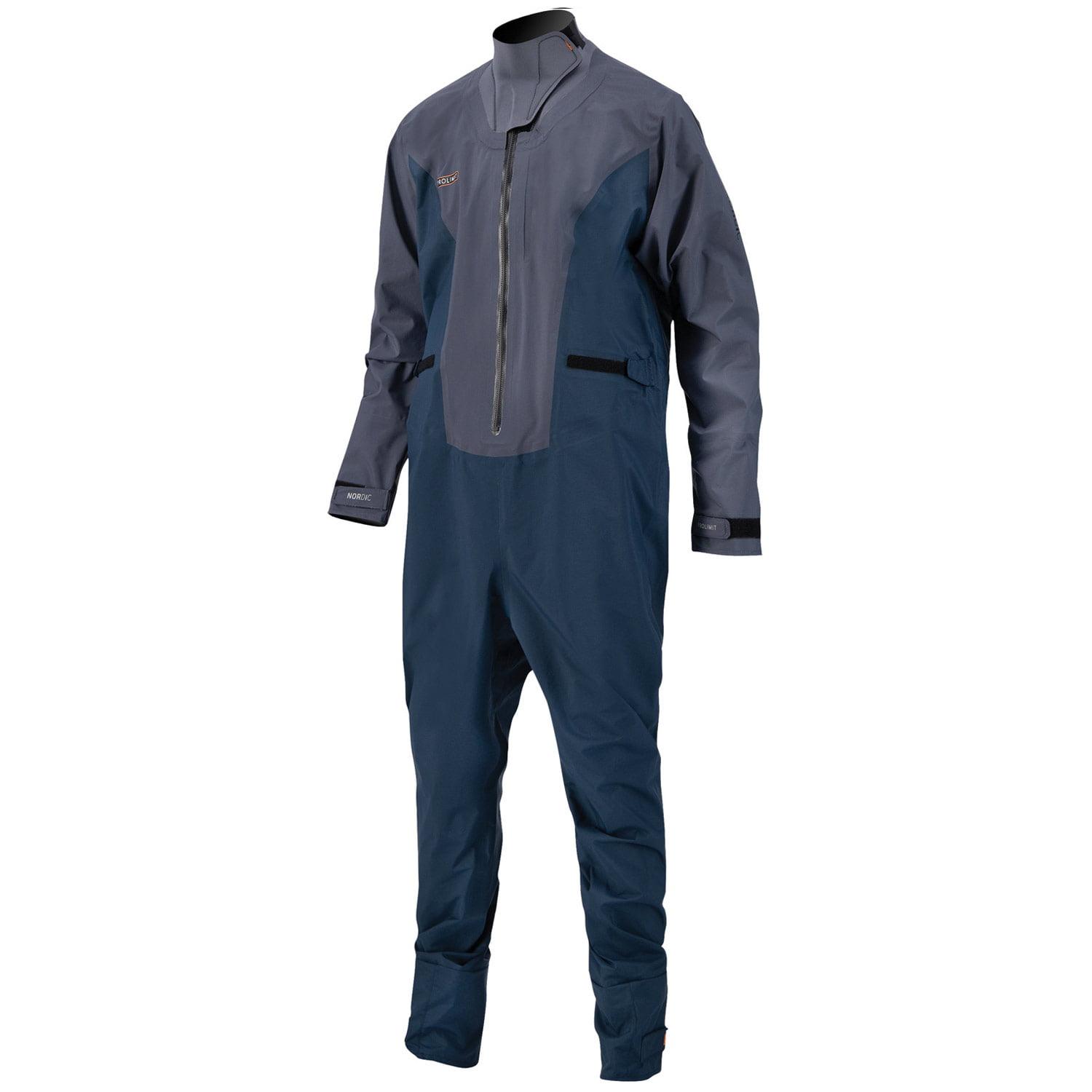
A drysuit is made from waterproof yet breathable materials. It features waterproof zippers and tight seals at the neck, wrists and ankles to prevent water from entering. Under the drysuit, you wear thermal base layers of your choice, allowing you to adjust insulation depending on temperature and activity level.
This layering system provides greater comfort, better freedom of movement and improved temperature control compared to traditional neoprene suits.
DRYSUIT FOR SUP
A drysuit for SUP is especially popular among paddlers who go on the water outside the summer season. It allows you to paddle confidently even in cold water, as you remain dry and warm in case of a fall.
Because it does not compress the body or restrict movement, a drysuit is well suited for longer tours, recreational paddling and learning in colder conditions.
DRYSUIT FOR KAYAK
In kayaking, a drysuit is often essential, as you are closer to the water and more exposed to splashes, wind and prolonged contact with wet surroundings. A kayak drysuit protects against water, wind and cold, while still providing enough flexibility for efficient paddling.
WHEN TO CHOOSE A DRYSUIT INSTEAD OF NEOPRENE?
A drysuit is the right choice when temperatures are low, the water is cold and you want to stay completely dry. It is suitable for anyone who feels cold quickly in neoprene, dislikes the tight fit or prefers more flexibility when layering for warmth.
For longer sessions, windy conditions, low temperatures and transitional seasons, a drysuit is generally a more comfortable and safer option than neoprene.