

SUP Transport
Filters
7 products




SUP Transport – Carrying Your Board, Driving It and Getting It to the Water
Transporting a SUP happens in two steps: first you drive your board to the spot, then you carry it from the car to the water. An inflated SUP board weighs around 10 kg, but it's long and hard to hold in the wind, so a carry strap, trolley or roof rack makes the job much easier.
Our range includes padded shoulder straps and carry straps for your SUP, an inflatable roof rack for cars without roof bars, tie-down straps for securing your SUP to roof bars, and SUP trolleys.
How Should I Transport My SUP?
| Where and how | What to choose |
|---|---|
| Short walk from the car to the water | SUP shoulder strap or carry strap |
| Longer walk, sand, hills | SUP trolley |
| Car without roof bars | inflatable roof rack |
| Car with roof bars | tie-down straps to secure your SUP |
| Rolled-up SUP in the boot | SUP bag with wheels and shoulder straps |
SUP Shoulder Straps and Carry Straps
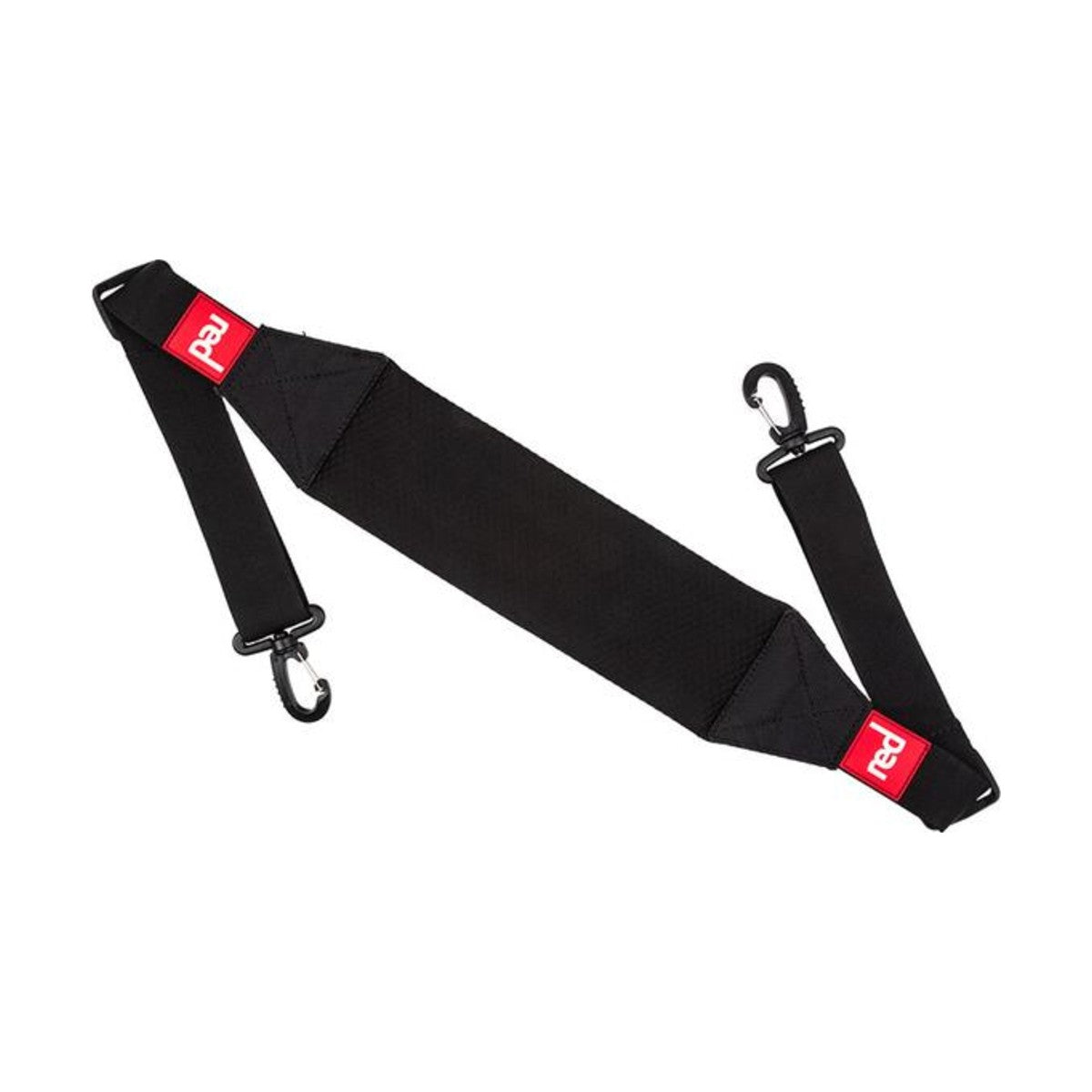
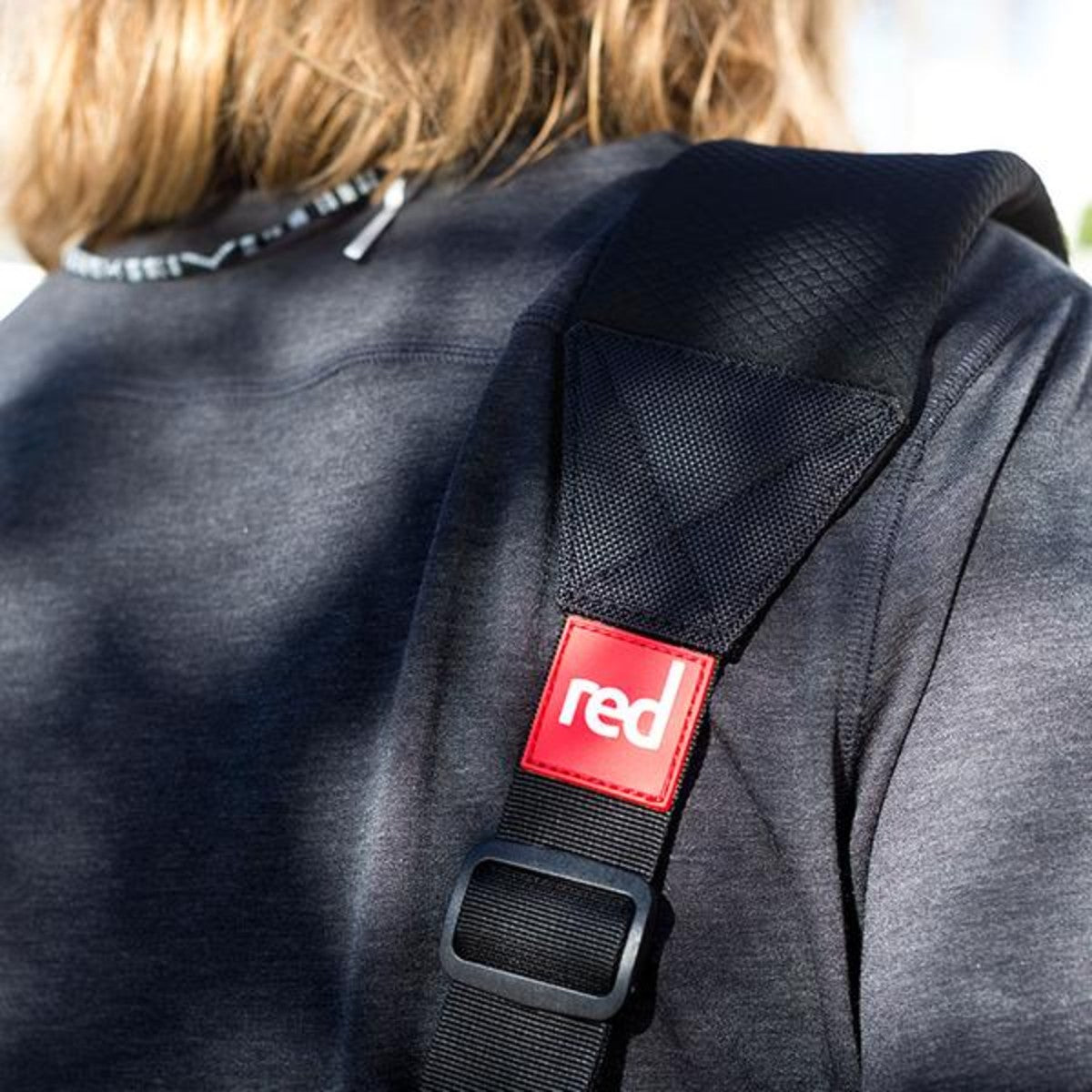
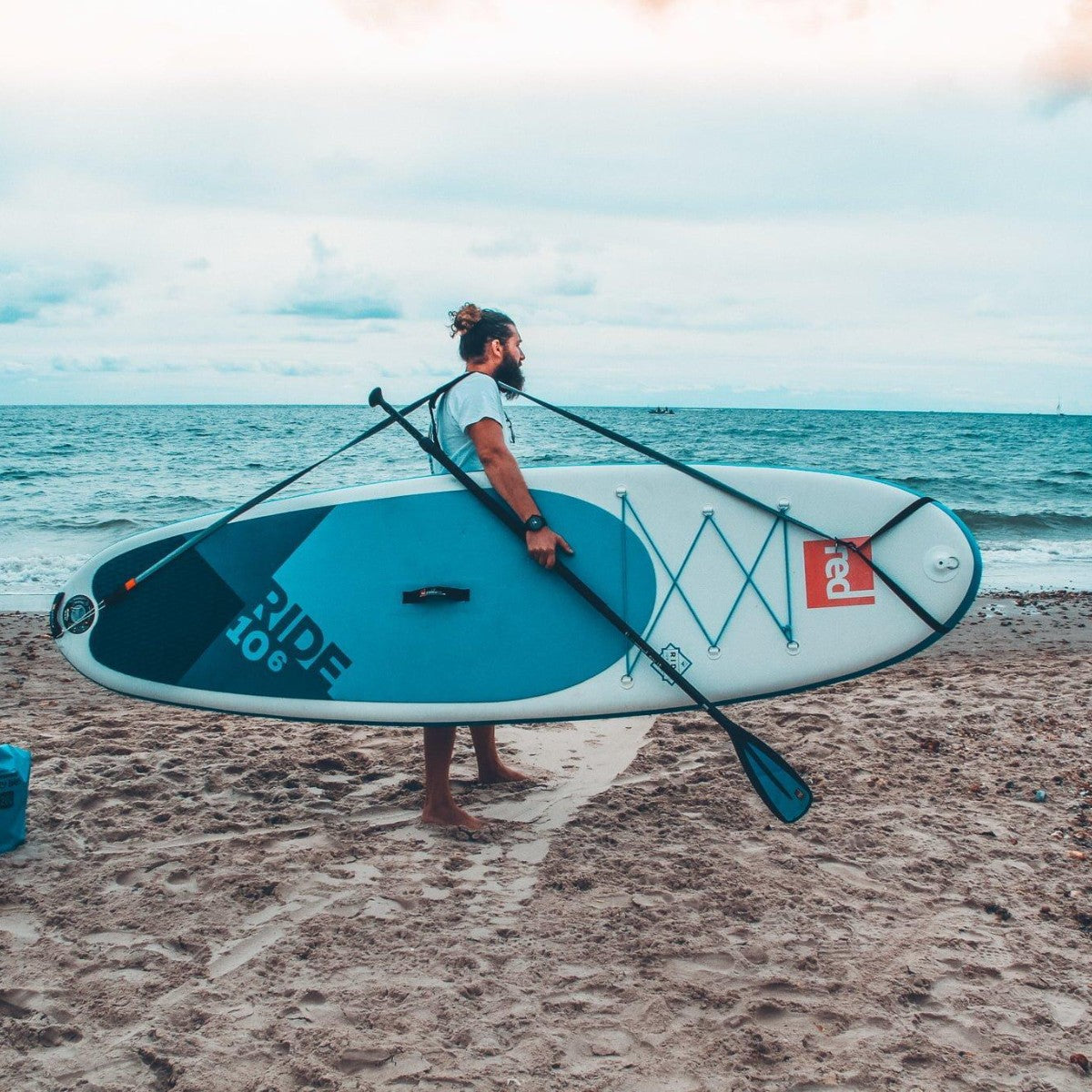
A SUP shoulder strap is a padded strap that clips onto your board so you can carry your SUP on your shoulder instead of under your arm. The weight rests on your shoulder, leaving one hand free for your paddle, a bag, a dog or a child.
- Padded shoulder strap – clips onto the D-rings on your board. On a board without nose loops, attach it with a strap wrapped around the nose.
- Carry strap with a paddle loop – carry your board and paddle with one hand.
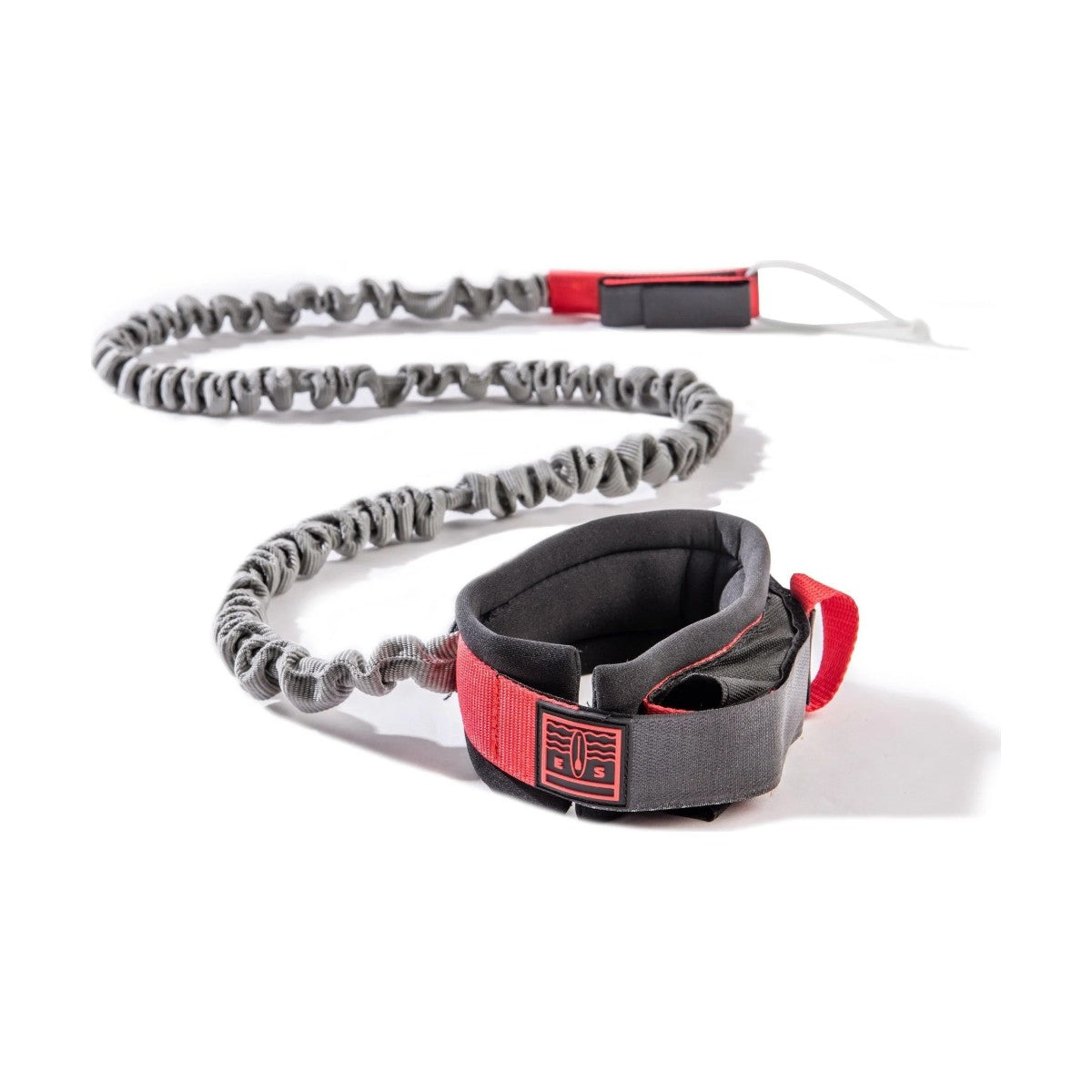
- Leash and carry strap in one – on the water it's attached to your leg, on land you extend it into a shoulder strap. That way you don't need two separate pieces of kit.
When carrying your board in the wind, keep the nose pointed into the wind so it doesn't get blown sideways.
Inflatable Roof Rack for SUP
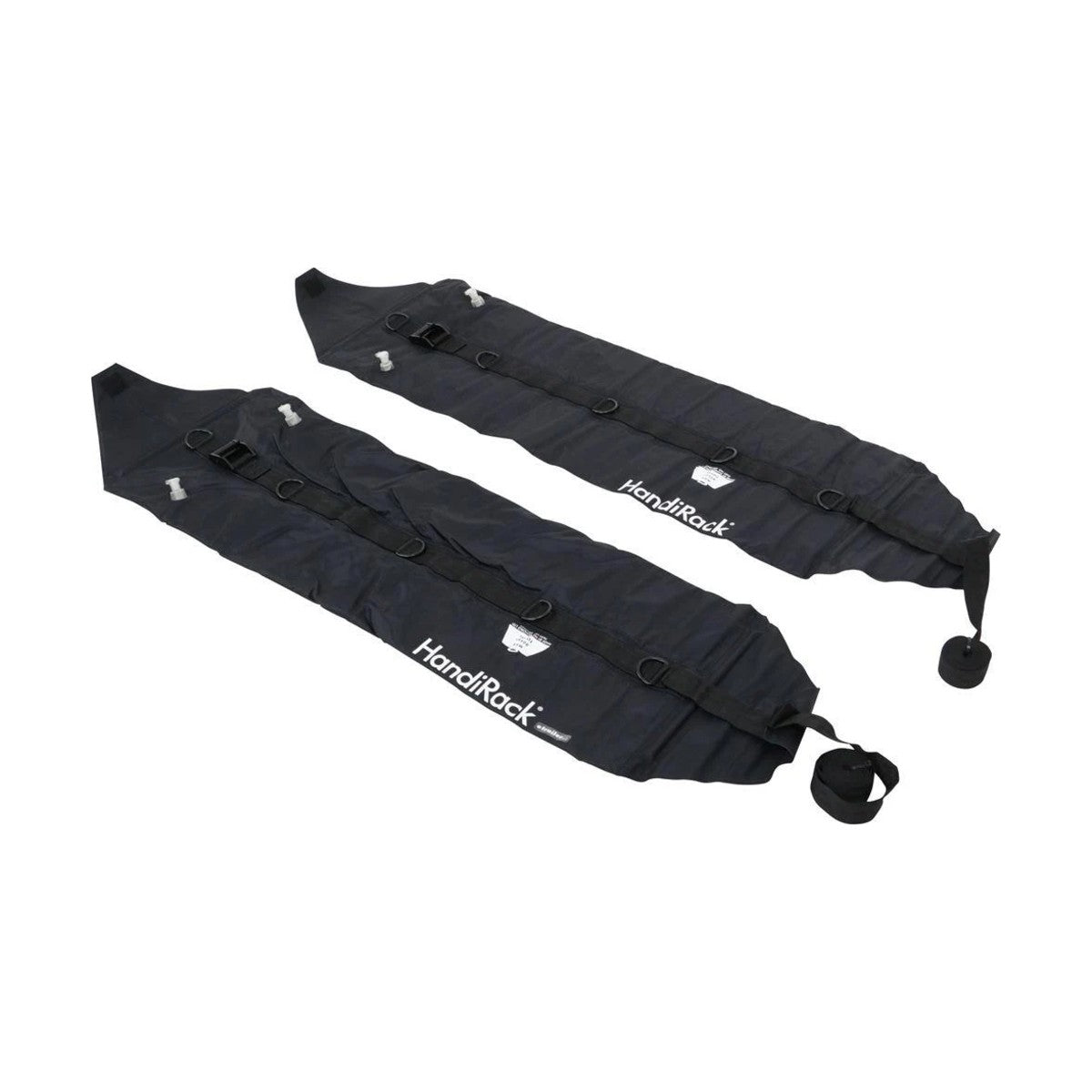
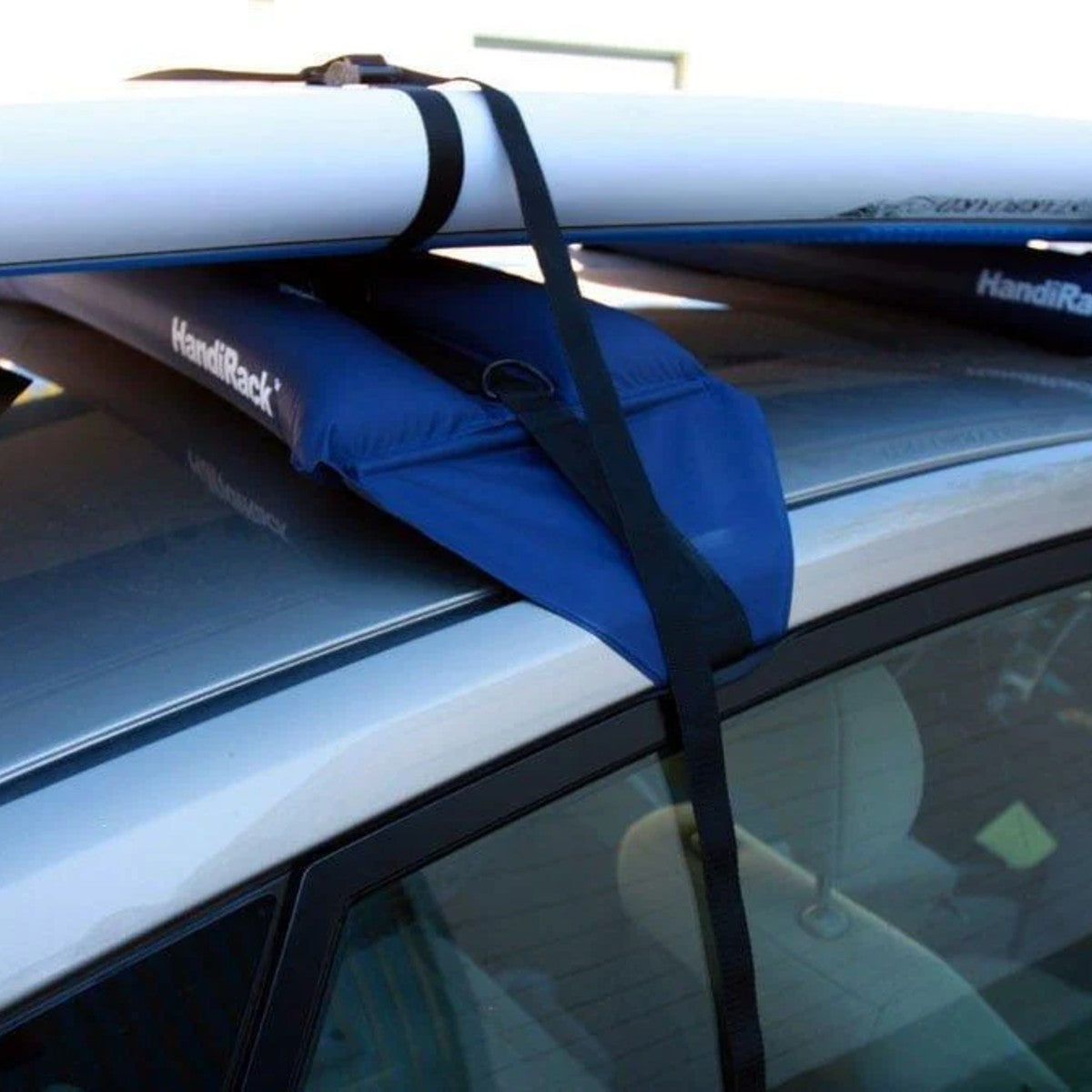
An inflatable roof rack is the solution for cars without roof bars. Place the two inflatable pads on the roof, inflate them and secure them with straps that run through the open doors of the car, without tools. When you don't need them, they pack into a bag in the boot.
Our inflatable roof rack:
- carries up to 80 kg, so it takes a SUP, kayak, canoe or surfboard,
- fits most cars with 2 to 5 doors, but not soft-top convertibles,
- has no sharp metal parts, so it's safe for inflatable boards too,
- is tested to the ISO/PAS 11154 standard.
With an inflatable roof rack, drive at no more than 110 km/h and stay within the roof load limit set by your car manufacturer.
SUP Roof Racks and Tie-Down Straps
If your car has roof bars, lay the SUP on them deck down with the fin at the back, then secure it with two tie-down straps. Keep these rules in mind:
- Tighten the straps firmly, but not with brute force, so you don't damage the board's rails.
- Twist the strap twice before tightening so it doesn't hum while you drive.
- Tie off the loose end so it doesn't flap and hit the roof.
- On a long drive, stop after the first few kilometres and tighten the straps again.
Our SUP tie-down straps come in 3 m or 4.5 m lengths, with a neoprene-covered buckle that won't scratch your board or roof.
SUP Trolleys
When the walk from the car park to the water is long or crosses sand, a SUP trolley is the easiest solution. Strap your board on and wheel it instead of carrying it. You'll find upright and flat trolleys, plus tips on choosing wheels, in our SUP trolleys.
Who Is SUP Transport Gear For?
- anyone with a long walk from the car park to the water,
- paddlers who head out on their own,
- owners of cars without roof bars,
- families transporting several boards at once,
- anyone whose shoulder or back hurts from carrying a board.
How to Care for Your Transport Gear
After use by the sea, rinse straps and the inflatable roof rack with fresh water so salt doesn't damage the buckles and seams, then dry them in the shade. Make sure the inflatable roof rack is completely dry before packing it into its bag.
Related categories
SUP trolleys · SUP bags · SUP storage · SUP leashes · SUP accessories