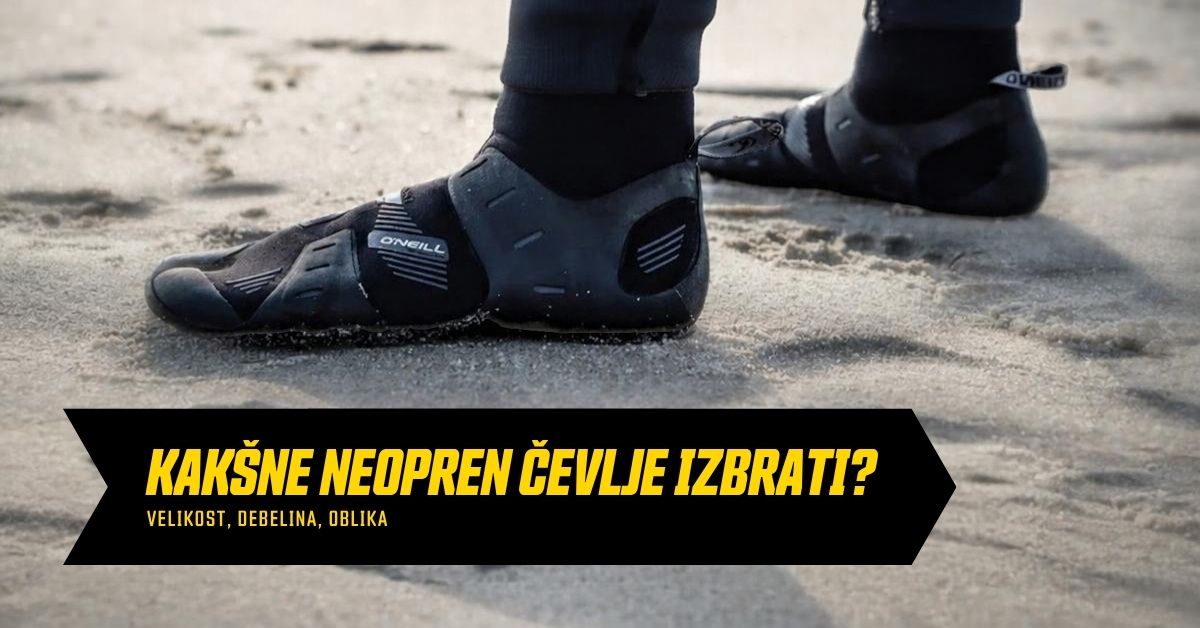
Good wetsuit boots are the ones you forget about half an hour into a cold session: they hug your foot, don't fill with water and don't pinch. In this guide you'll learn how to measure your feet, choose the right thickness and toe shape, wear boots with your wetsuit and avoid the mistakes that ruin a day on the water.
If you already know what you need, browse our full range of wetsuit boots, neoprene shoes and socks.

How to Choose Wetsuit Boots in 6 Steps
You make six decisions, in this order.
- Water temperature and sport. In summer, 2 mm shoes are enough; in autumn and winter, go for 5 mm or thicker. You'll find a detailed water temperature chart in our wetsuit boots collection.
- Height. Low-cut shoes for warm water, high-cut boots over the ankle for the cold.
- Toe shape. Round toe for warmth and comfort, split toe for balance on the board.
- Sole. A thick, reinforced sole for rocks, a thin one for board feel.
- Closure. A strap over the instep holds your foot in place, while Velcro or a zip makes high-cut boots easier to get on.
- Size. The boot should hug your foot with no wrinkles and no empty space.
What Are Wetsuit Boots Made Of?
A wetsuit boot has three main parts: the neoprene, the sole and the seams. Together they decide how warm and durable it is.
- Neoprene: thickness sets the warmth, stretch sets the comfort. Stretchier neoprene is easier to pull on and fits better.
- Sole: a thicker, reinforced sole protects you on sharp rocks; a thinner, softer one gives more board feel.
- Seams: glued and blind-stitched seams let in less water than flatlock seams, which is why they are common on winter boots.
- Closure: a strap over the instep holds your foot in place, while Velcro or a zip makes the boots easier to get on. A zip needs a neoprene gusset behind it, otherwise water runs straight through.
- Lining: winter boots often have a thermal lining that adds warmth and dries faster.
How to Measure Your Feet and Find the Right Size
Choose your size by the length of your foot, not only by the size you wear in everyday shoes.
- Stand on a sheet of paper and mark your heel and longest toe. Measure in the afternoon, when your feet are slightly larger.
- Compare the length with the size chart on the product page.
- Try the boots on barefoot, then take a few steps and do a squat.
Signs of the right fit:
- your heel doesn't lift when you walk;
- your toes touch the end of the boot without curling;
- there are no wrinkles or air pockets over the instep or ankle.
Neoprene moulds slightly to your foot but doesn't noticeably stretch, so don't buy boots that pinch. If you have narrow or wide feet, choose a cut that matches your foot shape, or try them on in our store in Ljubljana.
Boots Under or Over Your Wetsuit Leg?
Both work – each option has its own advantage. Choose based on your sport and how often you end up in the water.
- Wetsuit leg over the boot: the most common advice from boot makers and surf shops. Water that gets into your wetsuit drains out instead of pooling in your boots. Best when you fall often or duck-dive under waves.
- Boot over the wetsuit leg: less water runs up under your wetsuit when you walk through shallows or stand in the water. A popular choice for SUP, where you spend most of the time above the water.
If water still floods your boot, it is most likely too big or has a loose top edge. An ankle strap or Velcro closure helps.
Split Toe: Do You Need to Get Used to It?
Split toe boots separate your big toe from the other toes, so your foot doesn't slide inside the boot and you balance better on the board. Walking in them feels odd for the first few hours, but most people stop noticing after a few sessions.
- Pro: more stability and precision for surfing, wing foiling and kitesurfing.
- Con: your big toe can get a little colder in very cold water.
- Hidden split toe: the boot looks round on the outside, but the big toe is separated inside. You get the stability of a split toe with the warmth of a round toe.
If you walk a lot on rocks or get cold easily, go for a round toe.
Common Mistakes When Choosing Wetsuit Boots
Most problems with wetsuit boots come down to the wrong size or thickness.
| Problem | Cause | Fix |
|---|---|---|
| water keeps flushing into the boot | size too big or a loose top edge | a smaller size, a boot with an ankle strap or Velcro |
| toes go numb or hurt | boots too small or too narrow | a bigger size or a wider cut |
| cold feet despite boots | neoprene too thin for the water temperature and wind | one step thicker boots |
| foot slides on the board | round toe without a strap or boot too big | split toe or boots with an instep strap |
| boots smell bad | drying in a closed bag | rinse and air-dry after every use |
| sole comes unglued | drying in the sun or on a radiator | dry in the shade |
How to Care for Wetsuit Boots and When to Replace Them
After every use, rinse your wetsuit boots in lukewarm fresh water, dry them in the shade inside out first, and store them dry. Heat and sun dry out neoprene, so never put them on a radiator. For salt and odours, use a cleaner from our wetsuit accessories.
It's time for new boots when:
- the sole is worn thin or slippery;
- holes appear at the heel or toes;
- the neoprene has gone stiff and no longer hugs your foot.
Where to Buy Wetsuit Boots
Buy wetsuit boots from a shop that helps you choose the right size and thickness for your sport. You'll find our full range in the wetsuit boots collection, and you can try them on in our store in Ljubljana.
Related categories: Full wetsuits · Neoprene pants and leggings