

Hydrofoil Systems for Water Sports
Hydrofoil systems allow you to rise above the water’s surface using an underwater wing that reduces drag and creates a smooth, silent glide.
Whether you’re riding wing foil, refining technique in pump foil, or connecting swell lines in downwind foiling, the hydrofoil is the core of the entire setup — influencing lift, speed, stability and the overall feel on the water.
Choosing the right system makes the difference between an average ride and efficient, flowing flight above the surface.
Foil Sets and Assist Systems for an Easier Start
For a smoother entry into foiling — or faster progression — choose a carefully matched foil set, or upgrade your existing setup with a Foil Drive electric assist system.
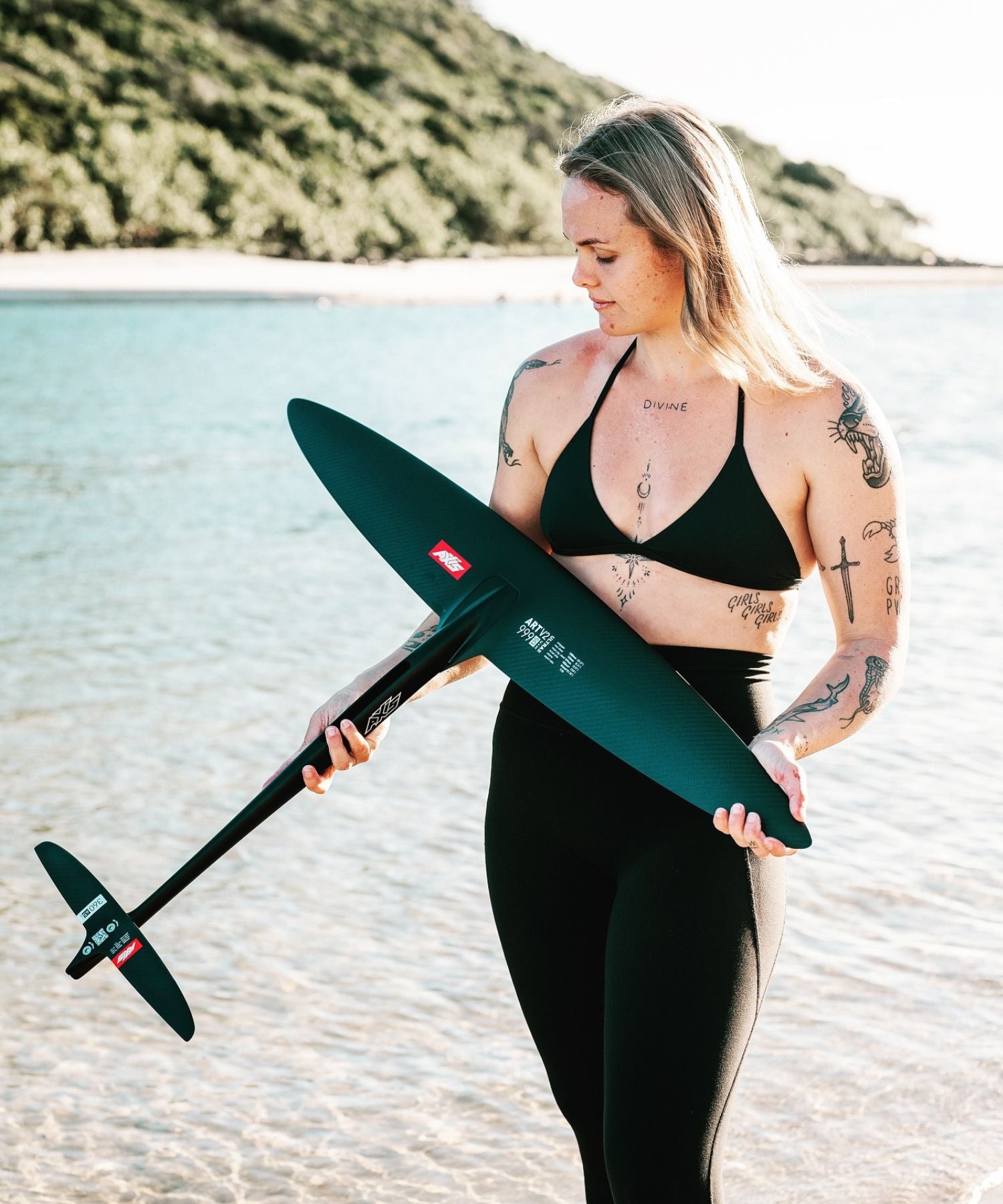

Complete Foil Sets
Complete foil sets include a mast, fuselage, front wing and stabilizer — carefully matched components designed to work together as a balanced, efficient system.
A foil set is the smartest choice if you:
- are buying your first foil,
- want a proven, fully compatible combination,
- prefer a simple and reliable setup without mixing individual parts yourself.
Foil Drive Assist
Foil Drive is an electric assist system designed to support take-off and extend your rides with minimal initial effort. It provides controlled power when you need it most — especially during starts or in lighter conditions.
Foil Drive is particularly useful for:
- downwind runs,
- technical training sessions,
- learning advanced maneuvers,
- riding in lighter wind or marginal conditions.
Complete Foil Sets
Complete foil sets include a mast, fuselage, front wing and stabilizer — carefully matched components designed to work together as a balanced, efficient system.
A foil set is the smartest choice if you:
- are buying your first foil,
- want a proven, fully compatible combination,
- prefer a simple and reliable setup without mixing individual parts yourself.
Foil Drive Assist
Foil Drive is an electric assist system designed to support take-off and extend your rides with minimal initial effort. It provides controlled power when you need it most — especially during starts or in lighter conditions.
Foil Drive is particularly useful for:
- downwind runs,
- technical training sessions,
- learning advanced maneuvers,
- riding in lighter wind or marginal conditions.
Build Your Own Hydrofoil System
Choose your front wing, stabilizer, mast and fuselage to create a setup that supports faster progression and matches your skill level and riding style.
With the right combination of components, your hydrofoil system becomes more than just equipment — it becomes a precise tool tailored to how you want to ride.
Our experienced team is here to help you select and assemble the optimal configuration for your goals and conditions on the water.


What Is a Foil?
A foil, or hydrofoil system, is an underwater wing that generates lift once sufficient speed is reached, raising the board above the water’s surface. By lifting the board out of the water, drag is significantly reduced, efficiency increases, and the ride becomes longer, faster and noticeably smoother.
Key Components of a Hydrofoil
A hydrofoil system consists of four essential components, each influencing performance and feel on the water:
- Front Wing – Generates lift, determines early take-off and efficiency at lower speeds.
- Stabilizer (Rear Wing) – Controls pitch stability, tail feel and turning dynamics.
- Mast – Connects the board to the foil and affects overall stability, maneuverability and performance in different water depths.
- Fuselage – Links the front wing and stabilizer, defining the balance between stability and responsiveness.
Advantages of Modular Hydrofoil Systems
Modularity means your foil system grows with you. Instead of replacing the entire setup, you can upgrade individual components and fine-tune the ride characteristics to match your progression and goals. Advantages of Modular Hydrofoil Systems are:
A System That Evolves with Your Skills
By swapping the front wing, stabilizer or fuselage, you can adapt your setup for higher speeds, increased stability or a more playful, responsive feel.
Adaptable Across Disciplines
One core system can be used for wing foil, pump foil or downwind riding — simply by choosing the right combination of components. Modularity gives you versatility without duplicating equipment.
Precisely Tuned Feel on the Water
A longer fuselage increases stability, while a shorter one improves responsiveness. A larger front wing delivers earlier lift; a smaller wing unlocks higher speeds and more glide. Even small adjustments can create a noticeable difference in performance and flow.
A Smart Long-Term Investment
Modular systems allow progressive upgrades without replacing the entire foil. This means greater flexibility, lower long-term costs and a more intentional build-up of a setup that truly reflects your riding style.
Foil by Discipline
Different foil disciplines place different demands on the system. Wing shape, the balance between stability and responsiveness, and the turning feel are not universal — the right foil is the one that supports the riding style you want to develop.
Wing Foil
The most widespread form of foiling, where wind power is transferred through the wing into the system.
For wing foiling, key characteristics include:
- stable and predictable lift-off,
- good control at lower speeds,
- reliable handling in gusty conditions,
- a balanced mix of stability and playfulness.
A wing foil setup should allow progression — from your first flights above the water to more dynamic turns and playful wave riding.
Pump Foil
A more technical discipline without wind or external propulsion. Movement is generated entirely through body mechanics and foil dynamics.
For pump foiling, important factors are:
- efficient lift at low speeds,
- strong glide performance,
- immediate responsiveness to weight shifts,
- lightness and energy efficiency.
In this discipline, the difference between an average and an optimized foil becomes obvious — small component changes can dramatically affect glide and overall feel.
Downwind Foil
Riding open water in the direction of the wind and swell. The goal is linking waves and maintaining long, flowing lines.
For downwind foiling, the essentials are:
- high efficiency at higher speeds,
- stability over longer distances,
- predictable behavior in choppy water,
- confident control when connecting swells.
Downwind demands a system that enables sustained flight with minimal drag — the feeling that you are flowing with the ocean rather than fighting against it.
How to Choose a Foil?
Choosing the right hydrofoil system is not just about price or brand. The key factors are your discipline, body weight, skill level, and the riding feel you want to achieve. The right combination of components determines how early you lift off, how stable you feel, and how efficient and playful your foil will be.
When choosing a foil, consider:
- Discipline (wing, pump, downwind)
- Body weight and experience level
- Desired riding feel (stability vs. agility)
- System modularity – the option to upgrade later
1. Front Wing
The front wing is the most important part of the system. It defines lift, speed, glide, and overall stability.
Surface area (cm²):
- Larger surface → easier lift-off, more stability, ideal for beginners and lighter wind
- Smaller surface → higher speeds, more responsiveness, suited for advanced riders
Aspect ratio:
- Low aspect → more lift, easier turning, greater stability
- High aspect → longer glide, higher efficiency and speed, requires more control
If you want an easier start and a forgiving feel, choose a larger or low-aspect wing.
If you’re looking for speed, longer lines, and efficiency at higher speeds, consider a high-aspect profile.
2. Stabilizer (rear wing)
The stabilizer controls pitch stability and the overall balance of the system.
- Larger stabilizer → more stability and a calmer ride
- Smaller stabilizer → more agility and quicker response
Beginners typically benefit from a more stable setup, while advanced users often reduce stabilizer size for greater maneuverability.
3. Mast
Mast length affects control, stability, and usability in different water conditions.
- Short mast (70–75 cm) → suitable for beginners and shallow water
- Medium length (80–85 cm) → the most versatile option
- Long mast (90+ cm) → more control in bigger waves and at higher speeds
Most riders eventually choose an 80–90 cm mast for its balance between stability and versatility.
4. Fuselage
The fuselage connects the wings and fine-tunes system stability and responsiveness.
- Longer fuselage → more stability, smoother feel
- Shorter fuselage → quicker response and more dynamic turns
This adjustment becomes more relevant as your skills progress and you start fine-tuning performance.
5. Let Your Discipline Guide You
Wing foil → stable lift-off and a balanced mix of control and playfulness
Pump foil → efficient lift and strong glide at low speeds
Downwind foil → high efficiency and stability at higher speeds
If you’re unsure which combination suits you best, starting with a well-matched foil set is often the smartest choice. The right setup means faster progression and more enjoyment on the water.
AXIS Foils
AXIS is considered one of the most modular and technically advanced foil platforms in the world.
Their system is built on precise geometry, high structural stiffness and broad cross-compatibility between components. This allows for an exceptional range of combinations between front wings, stabilizers, masts and fuselages — without limiting you to a single discipline or skill level.
AXIS consistently pushes the boundaries of what is possible in foil water sports. They are known for:
- outstanding efficiency and long, smooth glide
- advanced wing profiles with optimized lift-to-drag ratios
- low stall speeds that enable early lift and sustained flight at lower speeds
- innovative designs that often redefine industry standards
It’s no coincidence that AXIS athletes regularly win major downwind competitions.
But these systems are not built only for elite riders.
Their performance translates into real benefits for everyday users:
- easier lift-off and more stable flight at lower speeds
- refined balance between stability and responsiveness
- smoother wave linking without dropping out of glide
- predictable performance across a wide range of conditions
- faster progression with equipment that doesn’t hold you back
- greater confidence during longer downwind runs and connected swell lines
If you’d like help selecting the right AXIS setup for your goals, contact us — we’ll help you build a system tailored to your needs and riding direction.
FAQ – Frequently Asked Questions About Foils
Choosing the right hydrofoil system can feel complex, especially with different disciplines, wing sizes and modular options available. Below you’ll find answers to the most common questions about foil selection, setup, progression and compatibility — to help you make a confident decision and get the most out of your time on the water.